Dan Burgette Art
A man must love a thing very much if he not only practices it without any hope of fame or money but practices it without any hope of doing it well.
G.K Chesterton
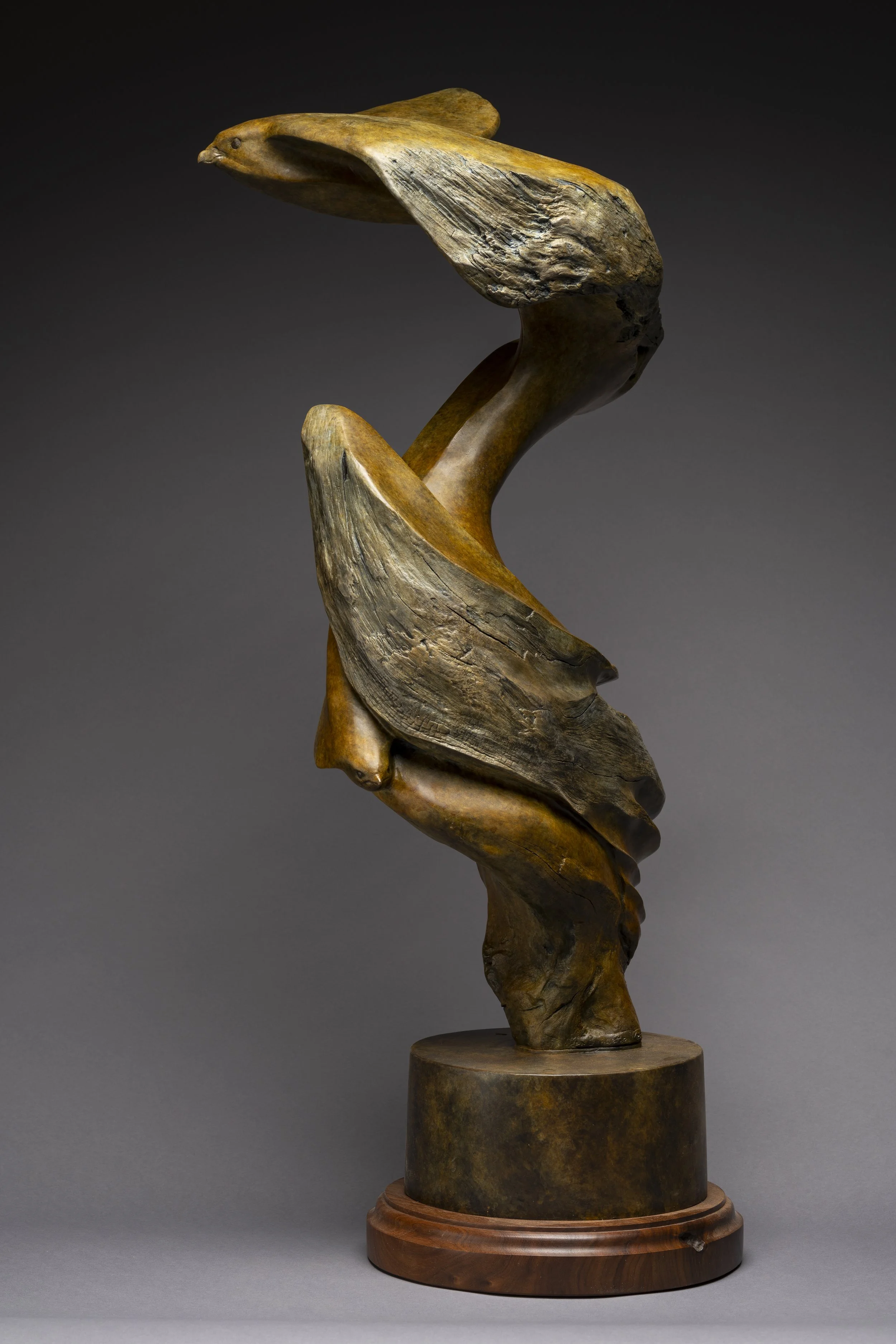
In 1989 when Dan attended the Ward show he saw an interpretive piece that had three quail flying out of a Manzanita root. It was carved by the Arendts and won third in the World Class Interpretive Wood Sculpture division. The movement of the piece totally captured him. He kept doing decorative birds and working on anatomy and painting skills, but the interpretive style attracted him.
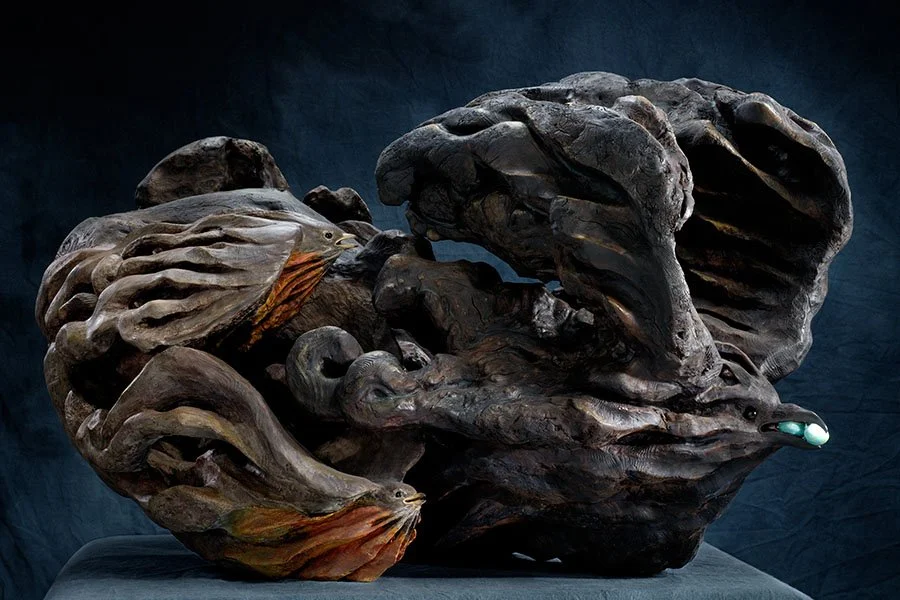
During family spring break trips to the Pacific coast he started to pick up wood with interesting grain. One piece of redwood turned into a flying great horned owl. It was a striking piece and he entered it in the World Class Interpretive Wood Sculpture division in 1999. Being a rookie at the world level he didn’t read the rules carefully enough. The entries had to be all wood. He had made the eyes and put polished plastic lenses on them. One lady that had volunteered at the show since its beginning told him that the owl was the most striking piece that had ever been entered. One of the judges told him that there was a heated discussion among the judges as they tried to find a way to disqualify this piece that was entered by an unknown carver. It was disqualified because the eyes were not wood. Another carver informed Dan about the all wood rule and said that he made eyes out of ebony. He was on the learning curve, but headed in a good direction.
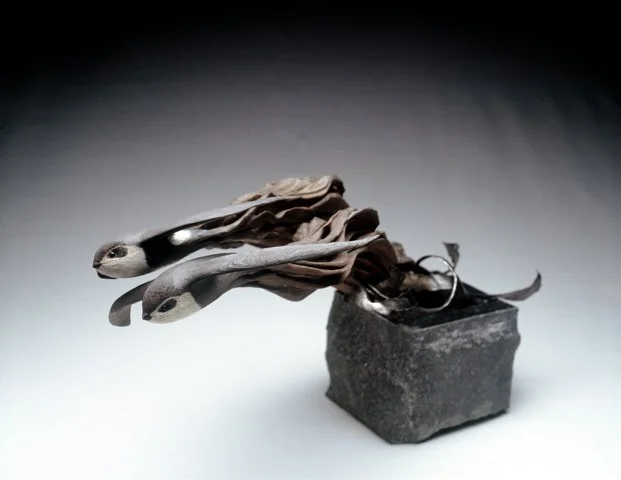
In 2000 he climbed Denali with his two sons and their friends, so he didn’t go to the Ward show. For the 2001 show, he carved two flying white-throated swifts – “Chasing the Next Generation”. They were carved out of a piece of swirly redwood and were attached to the granite base with forged stainless air currents. This was his third piece that used carved birds and forged air currents as the support to keep the birds in the air. And the eyes were ebony.
After the win in Interpretive, he still continued to carve decorative birds. This was partly because he liked that style. Also, it was useful because with decorative birds every feather needs to be in the right place, the right size, and the right color. And making feet was an exercise in getting the details right. It was good for the drill to really learn bird anatomy.
When he got to the show he put the piece on the table and a worker said that he couldn’t enter it because of the forged stainless and the entries had to be all wood. Luckily a member of the Ward show board was walking by at that time and overheard the comment. He looked at the piece and understood that the stainless was part of the base. The birds were all wood, so the piece was fine to enter. It won Best in World Interpretive Wood Sculpture for 2001. Dan had fun telling people that the last time he had placed at the show was a Second in Novice.
Winning Best in World was huge. Even though he didn’t have any formal art training he had worked really hard developing the right side of his brain, learning to see, learning to understand concepts like flow, lines, negative and positive space and what makes good art. He knew that sculpture connected with his mind. He had visited museums to look at the work of master sculptors. He read and learned as much as possible about art. He had sought out critiques of his work that he had entered in the show. So to say that he didn’t have any art training would be incorrect. He was convinced that anyone could be an artist.
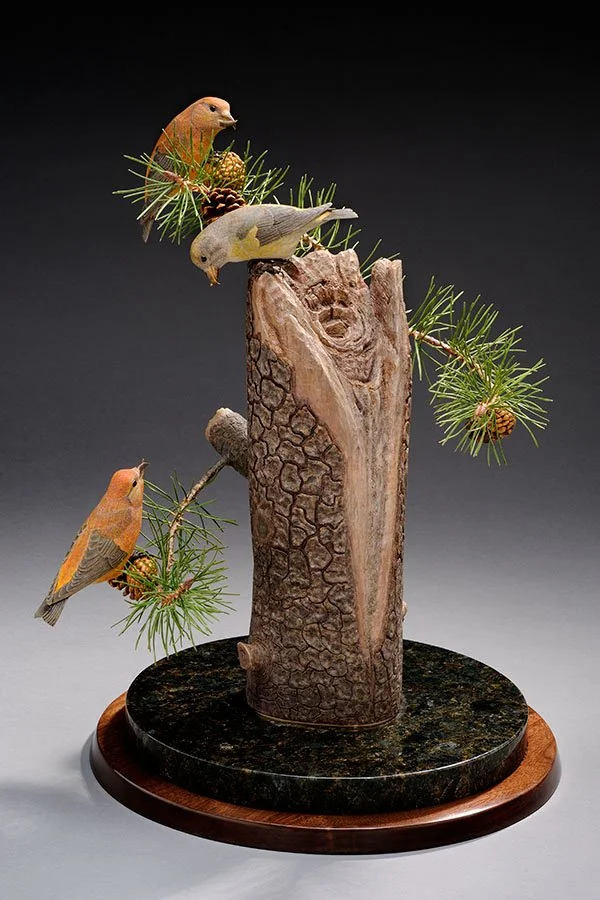
With a decorative bird, nearly all of the information is before the viewer. The size of the bird and its parts, how those parts go together, the color, size and shape of the various feathers and feather groups. These can be beautiful sculptures, but they don’t leave much to the imagination. The guiding thought for decorative bird artists is that humans can’t improve on what nature has done, so accurately represent that. The real artistic flexibility is in design and composition.
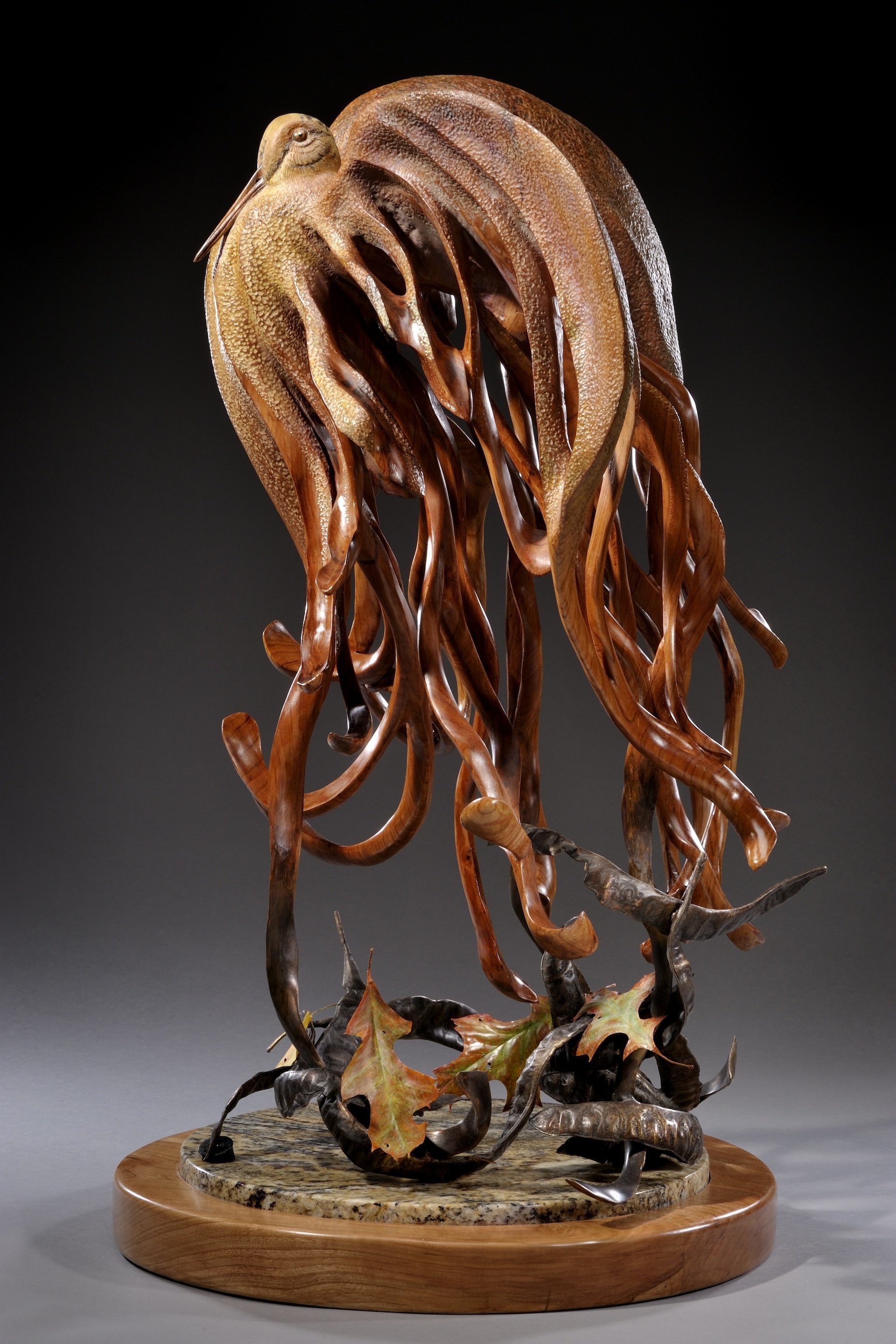
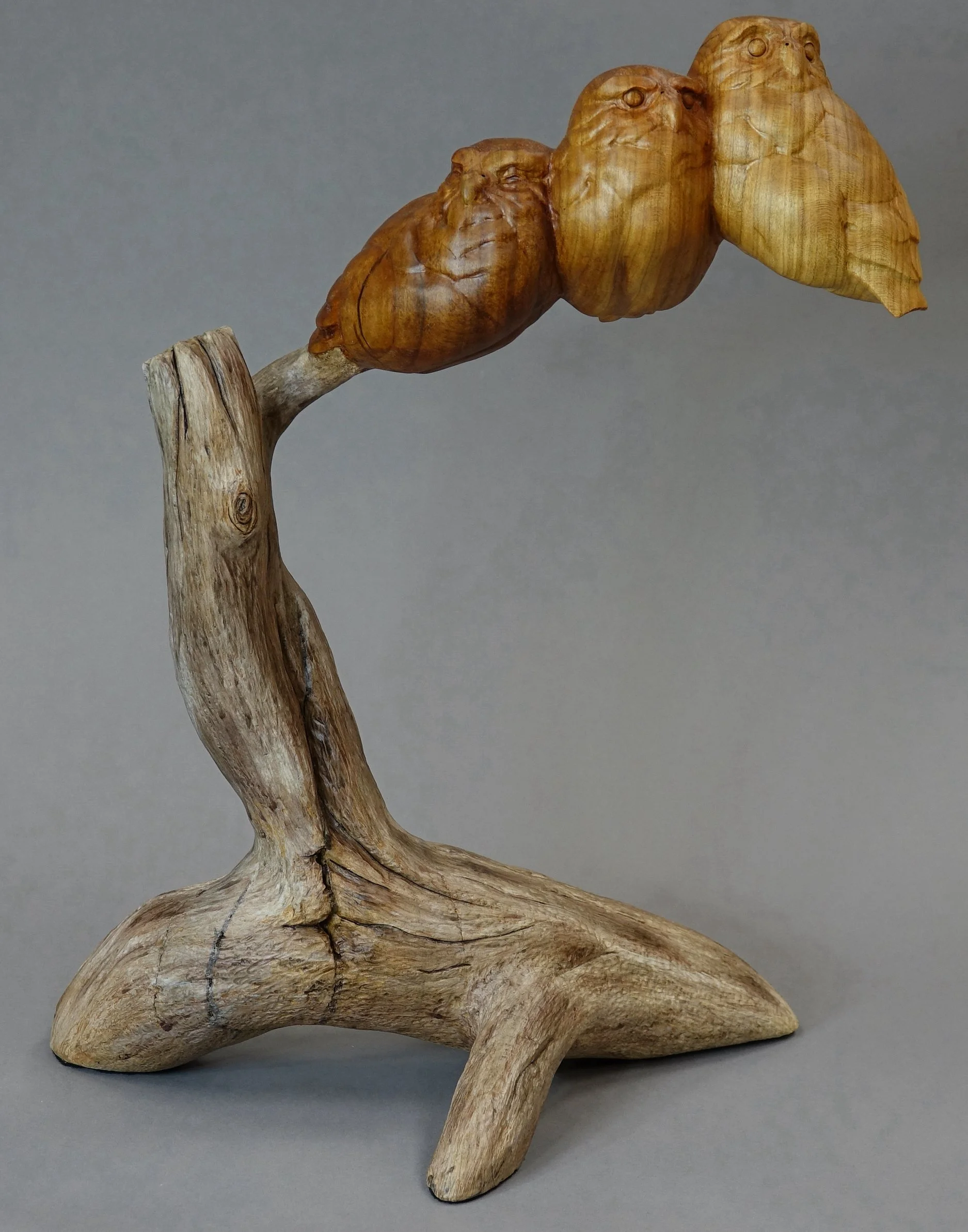
With interpretive sculpture, the artist provides some information and lets the viewer complete the story with their ideas and experiences. Sometimes Dan provides the size and shape of the bill accurately, but the rest of the bird is abstract. Sometimes he provides the head details, including feathers, and then detail is lost in air currents. Sometimes he starts the ideas and then lets the viewer add body parts like rapidly flapping wings.
But Dan believes that when the artist decides to put in detail it should be correct. It’s not O.K. to have the eye placement kind of right. Dan’s dad was a tool and die maker. In his shop was a sign that says “If it’s almost right, it’s wrong”. Dan isn’t a total perfectionist, but he values that sentiment. And that sign is now in his studio. Other signs in his studio say: “The Goal of Sculpture is to activate space using positive and negative space.” and “I am not trying to carve birds as much as I am trying to create sculptures that the viewer will feel are “birdy”.”
The illusion of motion
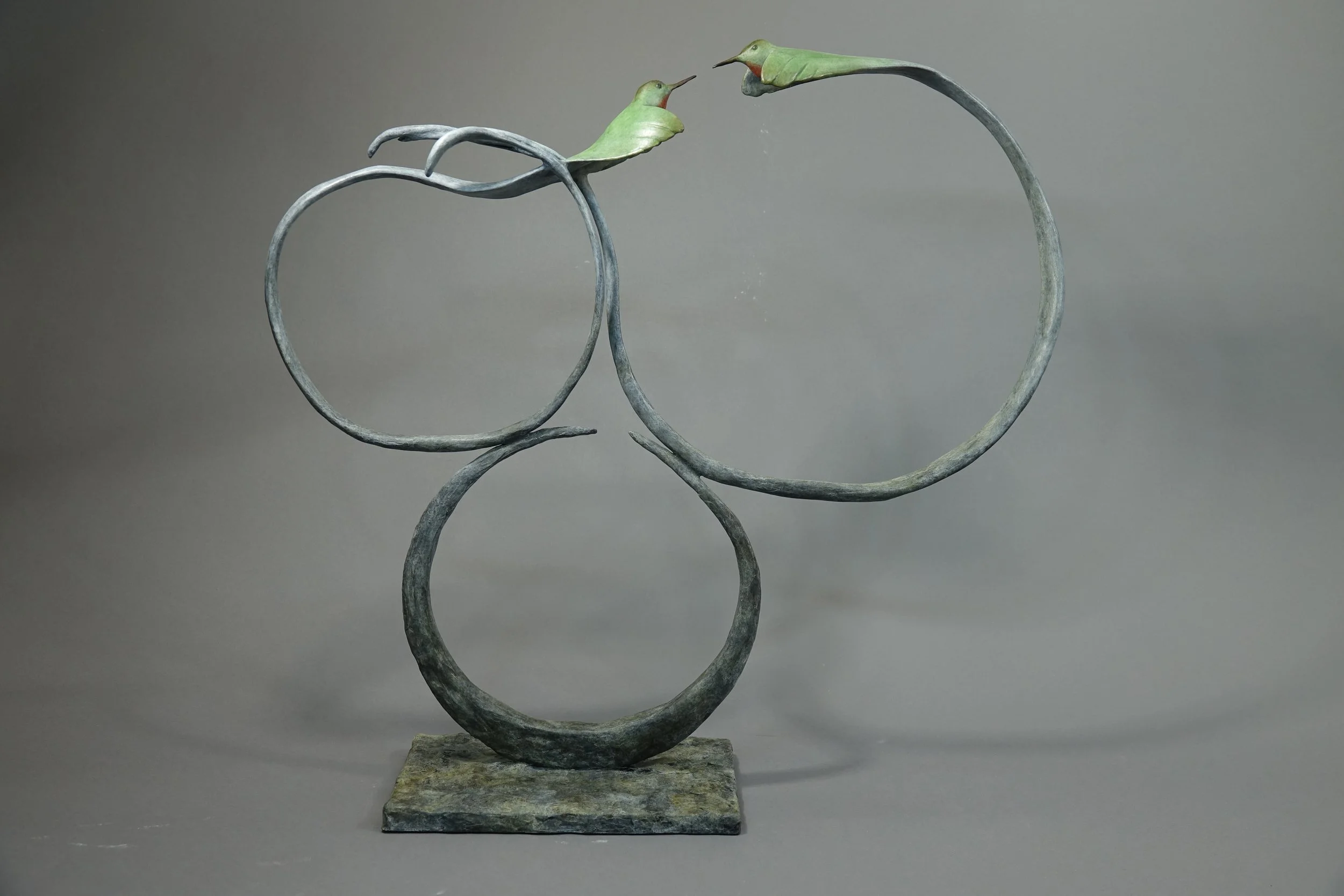
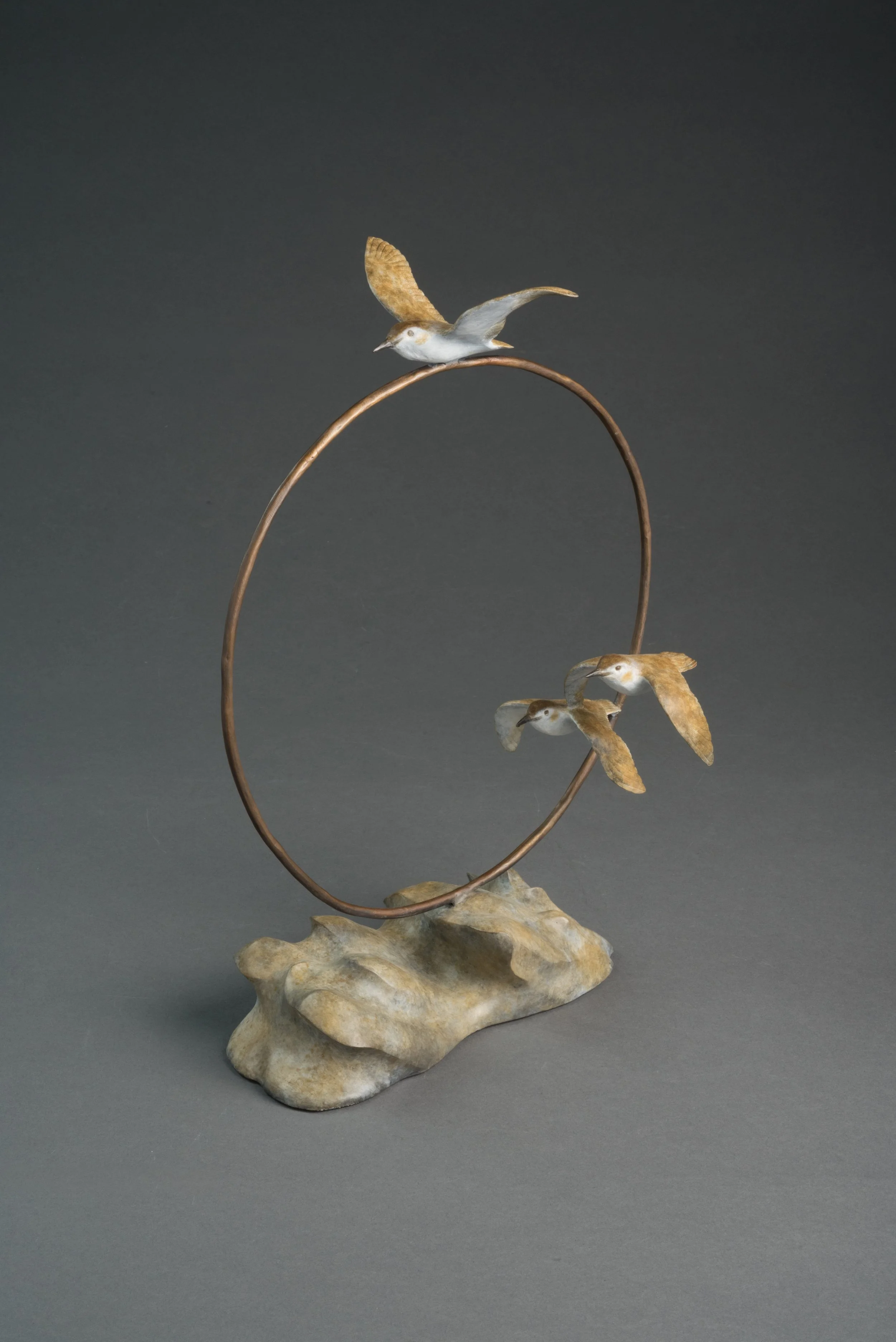
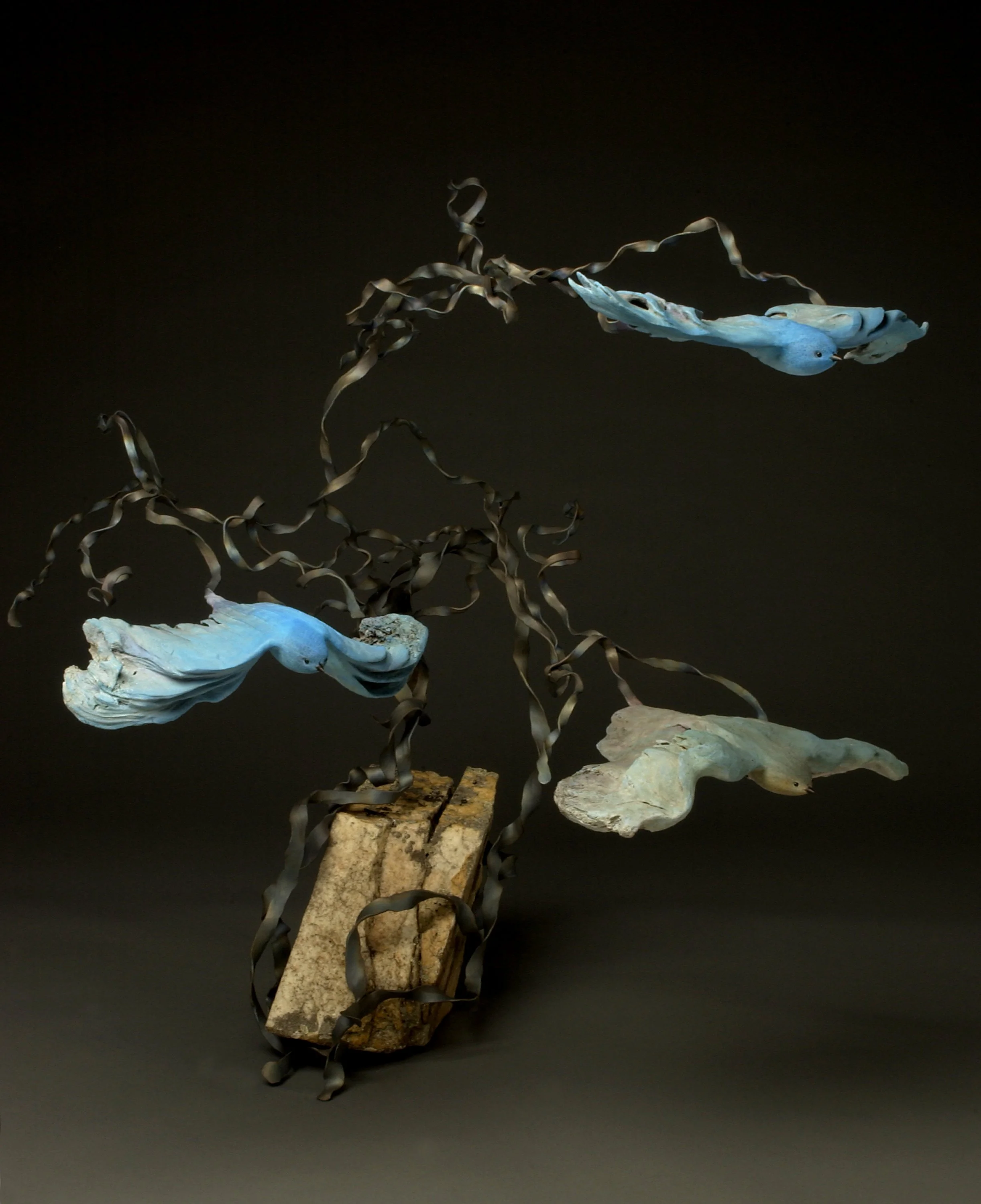
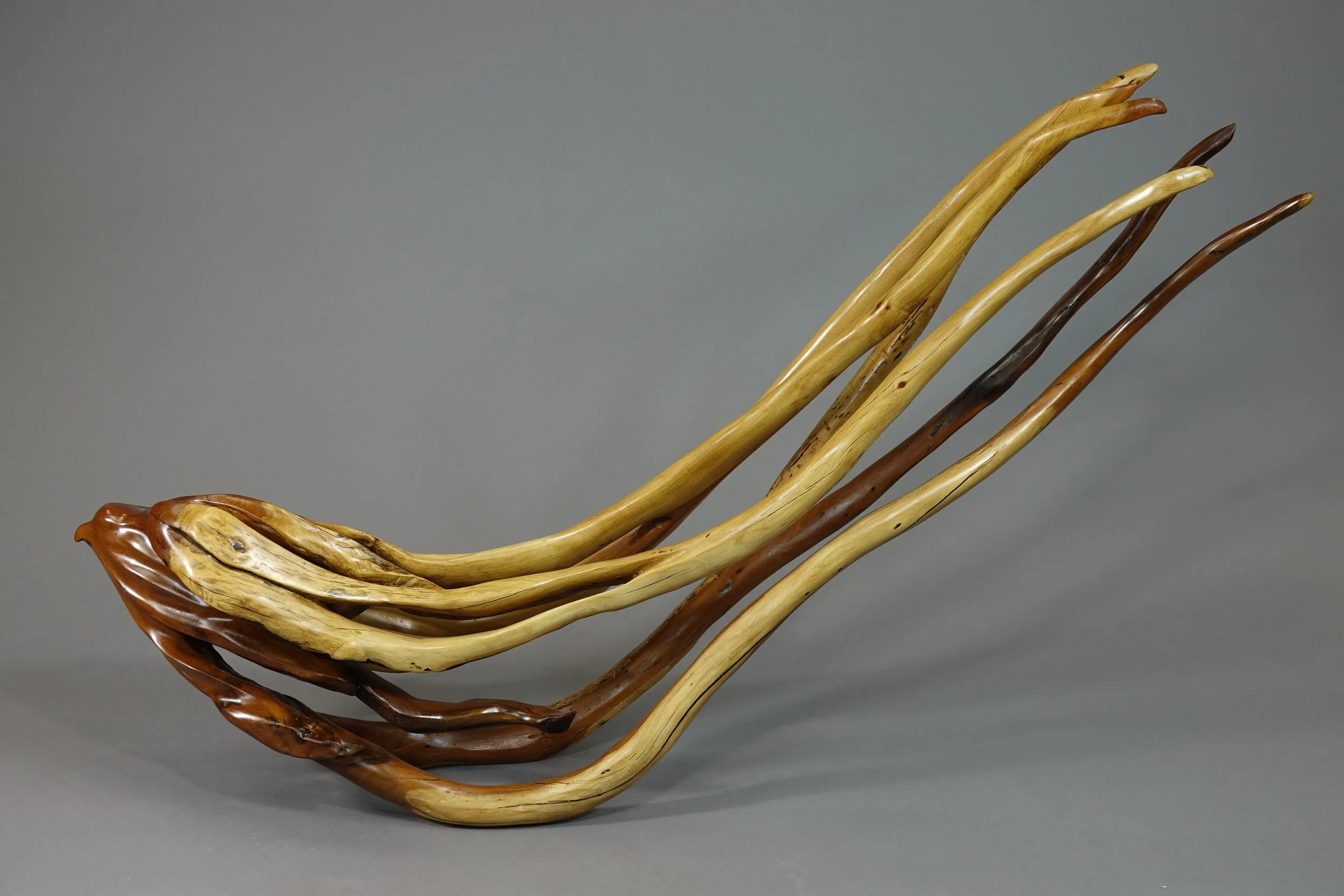
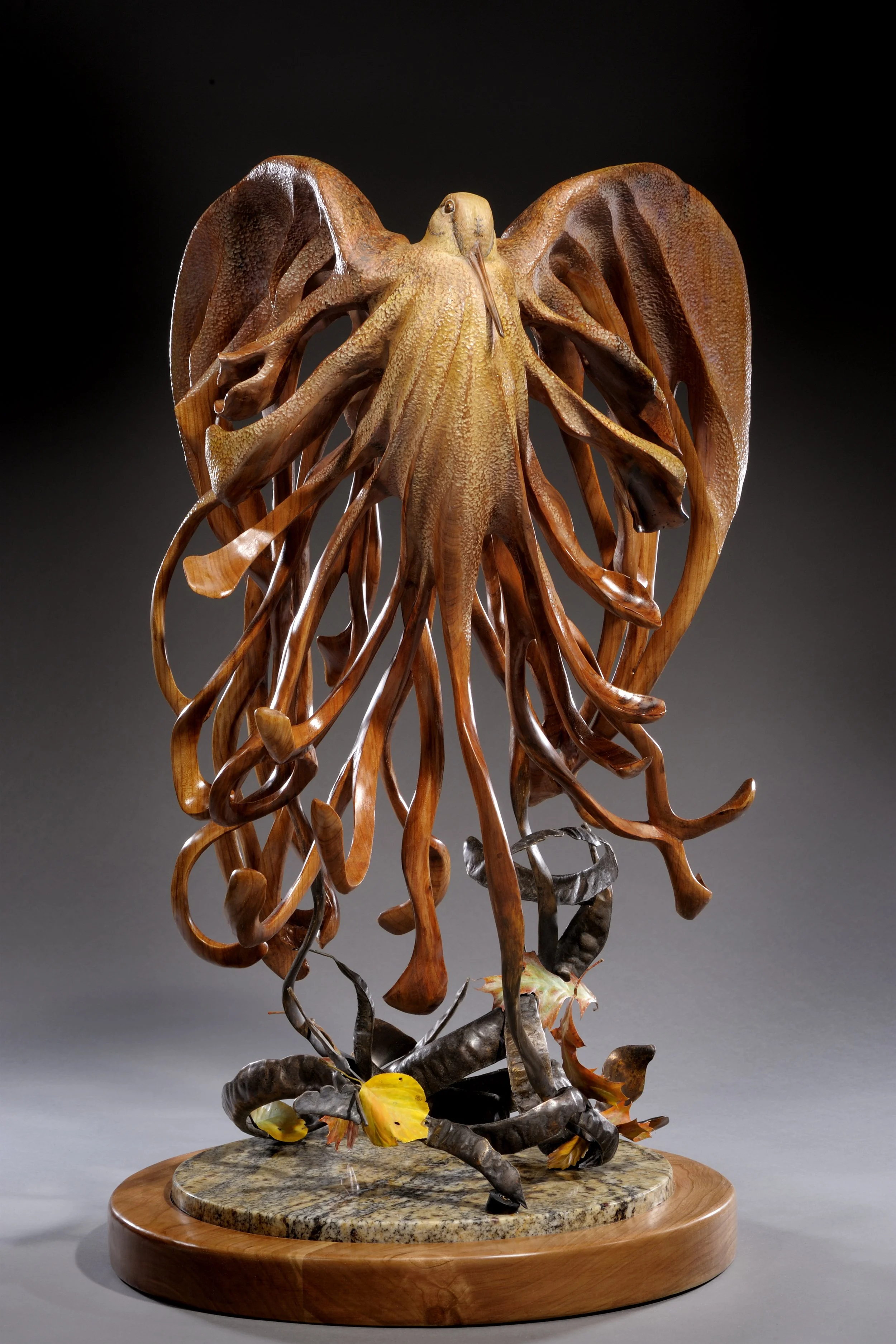
If his work has a noticeable theme, it is that his flying birds have an illusion of motion. Starting with looking at the Arendt’s flying quail in 1989, he has always been attracted to trying to represent flying birds. Too often artists that try to have flying birds end up with a bird on a stick. To get away from the stick or wire coming out of the bird’s body, Dan imagined the medium birds are flying through. The air. The air, which is composed of billions of molecules. And as a bird flies through the air it disturbs those molecules. And if the bird is going really fast, it disturbs them differently than if the bird is going slower.
So he started sculpting the air that trailed behind the birds and used those trails to support the birds in the air. In artistic terms, the positive space of the ribbons of wood or metal represented the speed and direction the bird was traveling. And the negative space between the ribbons was meant to read as air. Combined, the viewer hopefully understood that the birds were flying though the air. And hopefully it wouldn’t occur to the viewer that the air currents were the support that kept the birds in the air. The lines and angles of the air currents suggested the speed of the birds.
The Ward Show
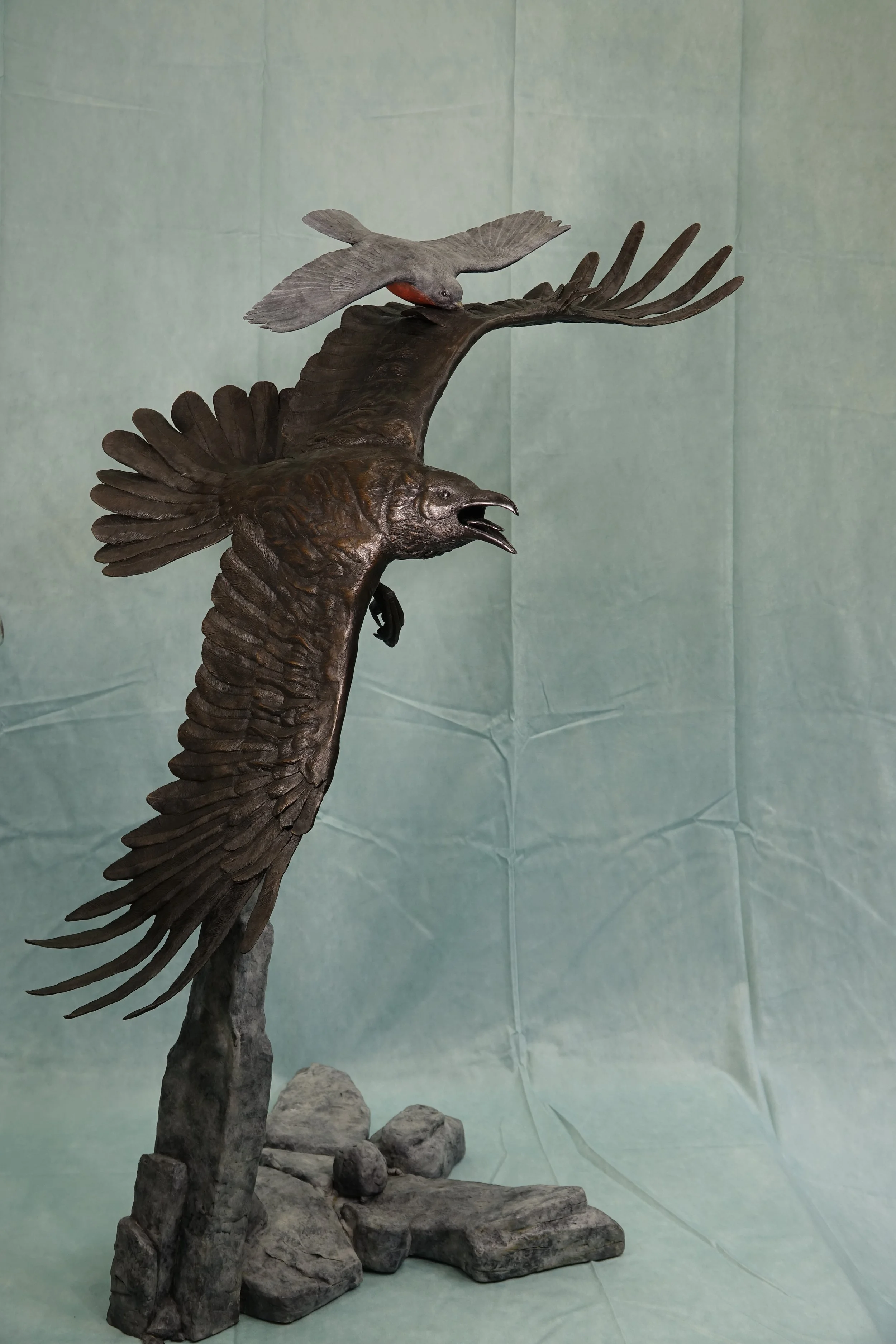
Dan’s desire to continue to learn and to create quality art has kept him on a path of not getting stagnant. He says that he is always on a learning curve. He thinks that it probably would have been good to stick with one style or technique until he got really good at it, but his curiosity keeps him moving. His artistic continuum saw him start with carving three ducks before moving on to curlews, a trumpeter swan, loons, owls and other birds. Style went from decorative to interpretive. Materials went from a few species of wood to over thirty in his stash. When he couldn’t support flying birds with thin wood, he worked with a blacksmith to learn to forge stainless steel and titanium. And his studio has blacksmith tools, a forge, plasma cutter, welders and a micro torch. When he had a chance to learn to cast bronze from another artist, he built his own furnace so that he could melt fifty pounds of bronze at a time in his driveway. He recently learned what waterjet cutters can do to speed the process, and he does the patina on some of his bronzes. In recent years he has worked in clay or combined clay and wood for models that are cast in bronze. He has used digital scanning and printing of a delicate wood carving as part of the process to create bronze sculpture. He works in wood, metal and stone. A recent interest is carving Bitch Creek jade, a very hard translucent rock. Whatever material, tool or process that will accomplish his idea is fine to try.