ABOUT
ABOUT / DAN BURGETTE
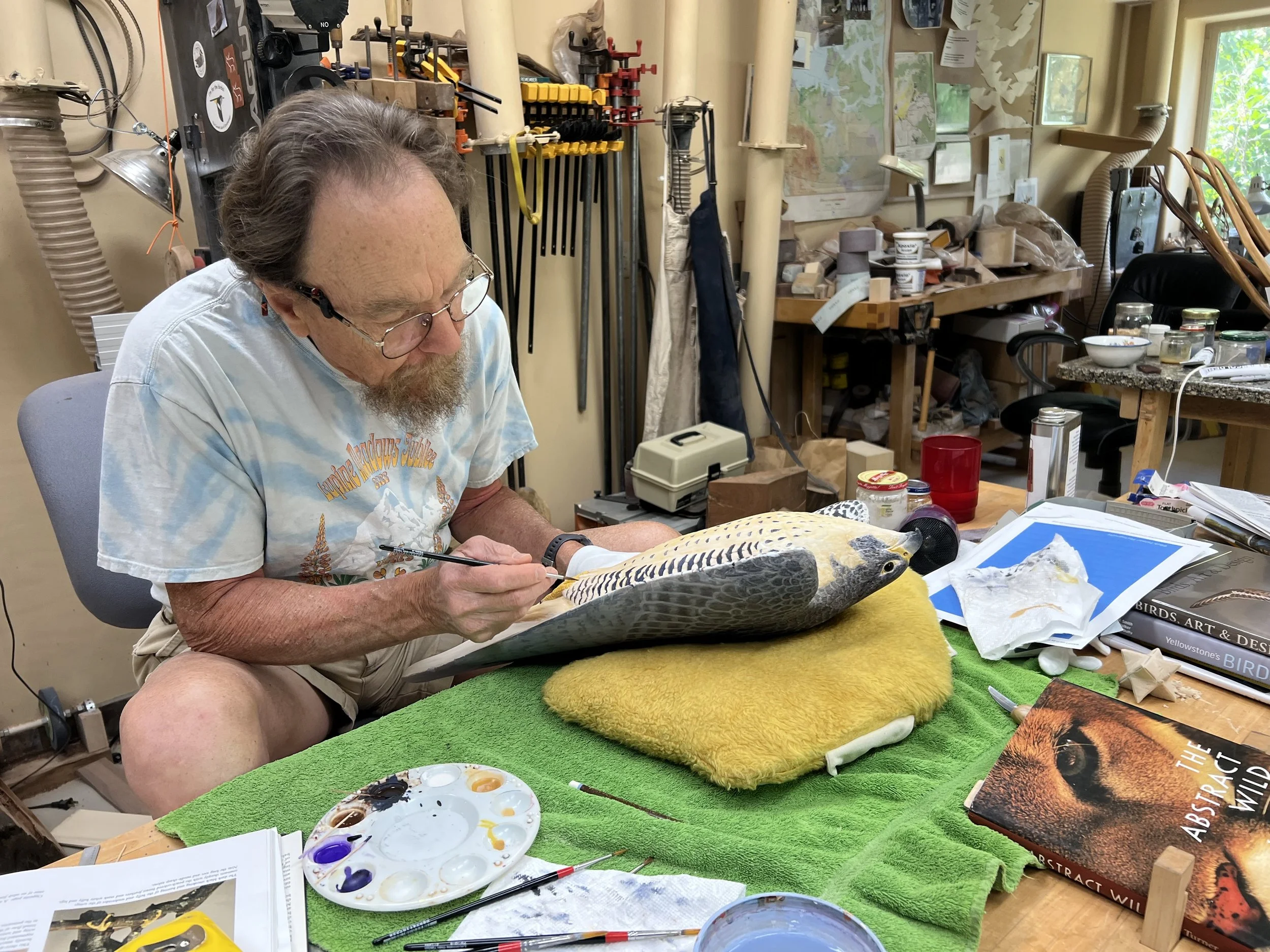
Dan Burgette (1947 - ) grew up near Ft. Wayne, Indiana and earned B.S. and M.S. degrees in Conservation from Purdue University. He retired from the National Park Service in 2004 after working as a park ranger in Grand Teton National Park for twenty-seven years. After retiring, he moved over the hill to Teton Valley, Idaho. He can still see the Grand Teton out of his window.
While doing his ranger duties, including as a climbing/rescue ranger and as the wilderness coordinator for the park, he escaped the office to spend many days in the park’s backcountry. Observing and interacting with wildlife was a regular part of his life. And those experiences inform his art. He continues to add to his wildlife encounters during outside activities near his home and during canoe trips to the arctic.
How important is Dan’s art?
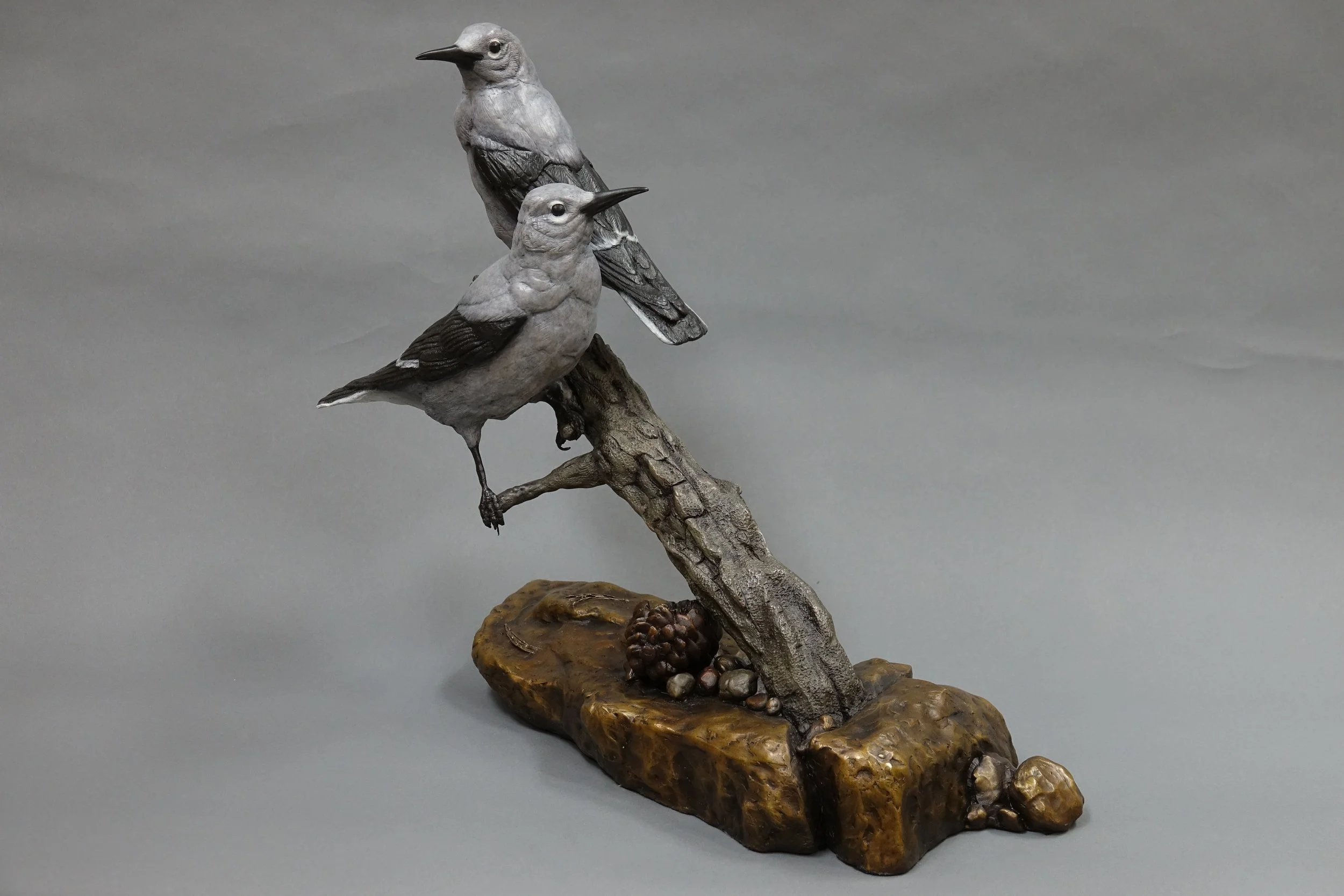
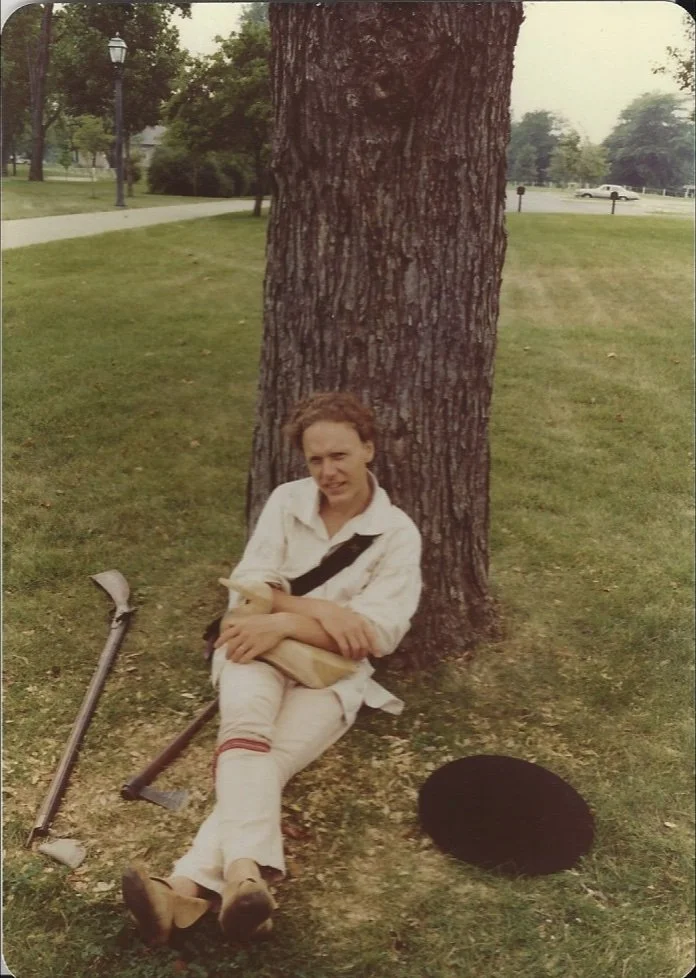
Without any formal art training, he assumed that he didn’t have any artistic talent. That started to change in the spring of 1981 when he was thirty-four years old. He was working at George Rogers Clark National Historical Park in Vincennes, Indiana. Part of his duties was to dress as a frontiersman and sit under a tree while he whittled and talked to the visitors about the Revolutionary War. He had a new boss that had come from Redwood N.P. The boss’s wife had a duck decoy that had been carved with a chainsaw. Having a duck decoy sounded neat, so he went to the woods, cut off a tulip poplar limb and carved his first duck with his historically accurate tomahawk.
He didn’t have a very good idea of what a duck looked like. He still has it, and it’s crude. But based on that, his wife bought him some Exacto knives. That fall he was lucky enough to get transferred to Grand Teton National Park. A dispatcher at the park knew about bird carving because her folks sold carving supplies and the family went to the Ward World Wildfowl Carving Championships in Ocean City, MD, each year. Her folks pointed him in the right direction and they entered birds in the Ward show that he sent them. In 1989 he drove his family to see the show. His entry’s habitat was good, but his bird anatomy needed work. During this early learning curve time he won a second place in Novice class.
As his skills started to improve and he sold some pieces, he felt that it was unfair to others to be competing with novices. So he moved up in the classes. He won some honorable mention ribbons, but never placed in the top three. He knew that his painting skills were not as good as the winners’ skills.
Since he realizes that he makes things that people don’t really need, he takes a long time to make them and then asks a lot for them, he wonders how important his art really is. As an artist, it is important that he create. But for the collector, the question is the same. The feedback he has received from collectors indicates that what he is doing is important. He hears from many collectors that his pieces are the centerpiece of a room.
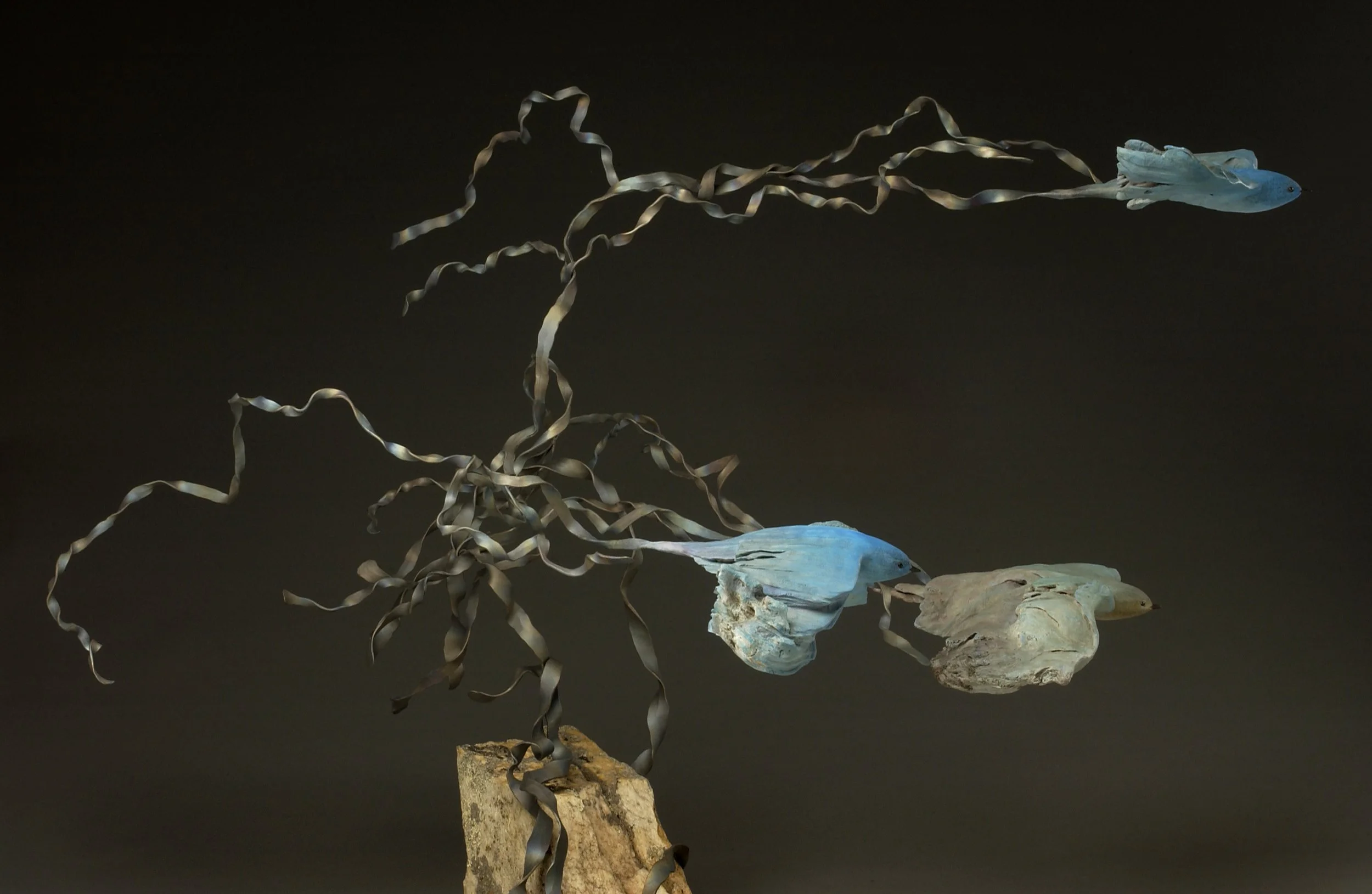
It pleases him to hear that his work helps people connect to the natural world. With his degrees in Conservation, he has long focused on the importance of the natural world. He feels that humans are part of that world - wilderness shouldn’t be seen as a place where humans are just visitors. We need to understand the importance of other wildlife species since we all inhabit the same planet. Some of his work just embraces the beauty of nature, but some of Dan’s work has a subtle reminder that humans affect the natural world. And he uses five percent of what he earns with his art to support organizations that protect natural systems.
So his answer to the question is that his art is very important. Probably not to everyone, but to some. And that is enough reason to keep doing it.
ART IS PART OF LIFE
Since his typical piece takes 300 to 500 hours (and he has taken up to 1200 hours), he went from making one or two pieces a year before leaving the National Park Service to being able to sculpt almost full time. Life needs balance, so he still tries to stay fit, backcountry skis and hikes, tries to climb the Grand Teton each summer, travels the world on birding trips, goes to art shows, and visits family.
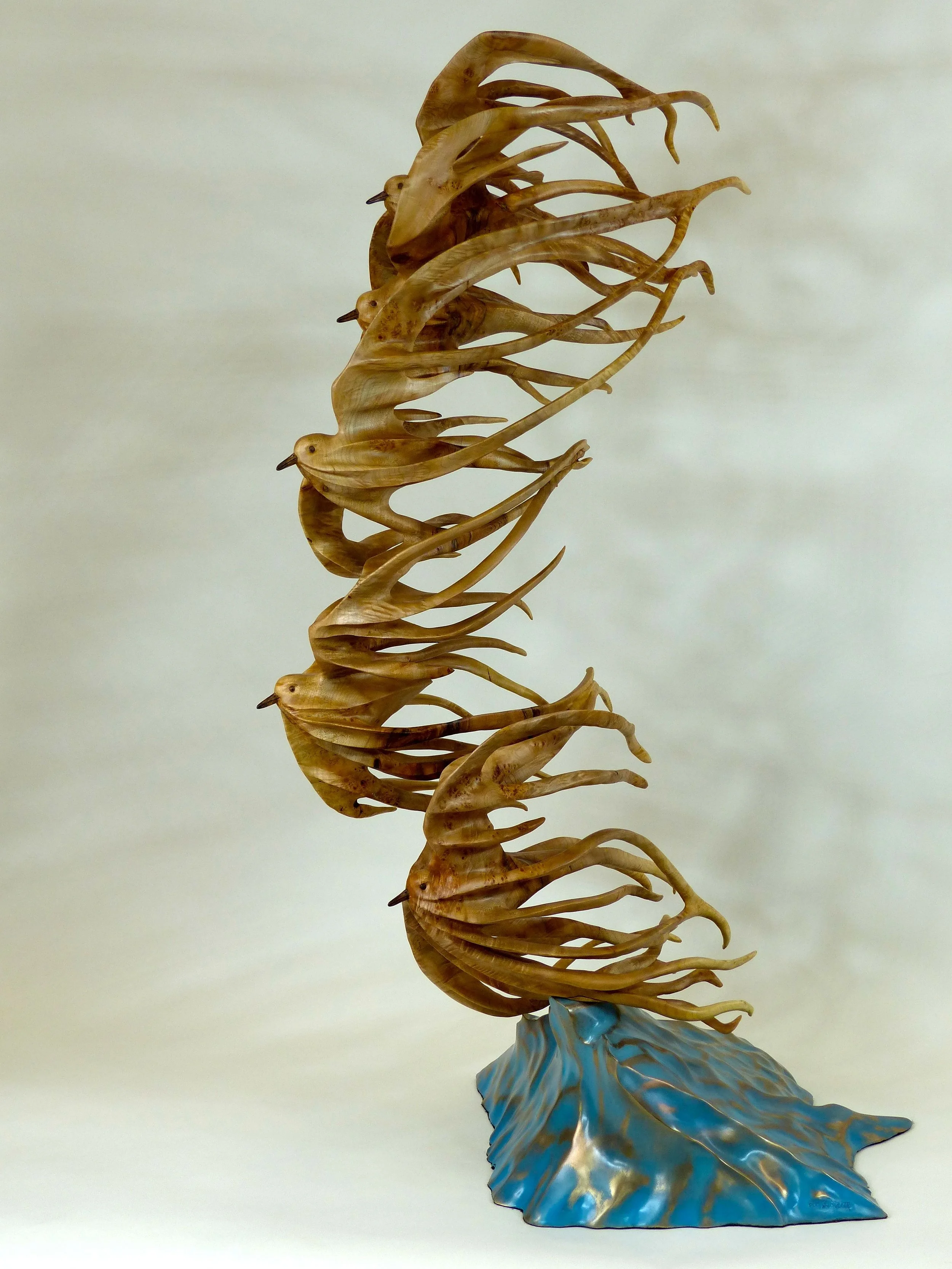
An important part of his life has included canoeing in the arctic. Doing trips that sometimes last forty days or more he flies into remote rivers and spends weeks without seeing other humans not in his party. But he does see wildlife. Especially birds. Sometimes he has an idea for a piece, but he wants to see the birds in action. In 2014 he wanted to carve a flock of birds. He knew that he couldn’t do large birds, so he focused on peeps. He knew that the semipalmated sandpipers nested in the arctic, so he was on the lookout as he canoed the Back River. One day a flock of five peeps flew by the bow of his canoe ten feet away and then landed. He saw them fly for ten seconds. But it was just what he needed. He went from wanting to carve a flock of birds to wanting to carve a feeling. A feeling of the kinetic energy of the passing flock with the blur of wings and swoop of movement. He got a two hundred pound bigleaf maple log and saved the best four and a half pounds. The carving, “Peep Show”, totally captured the feeling he got when the flock passed his canoe. Art is important to enhancing the quality of life, and he feels fortunate to be able to experience wild nature that he can portray in his art. And hopefully those art pieces can enhance the lives of others that appreciate nature.